


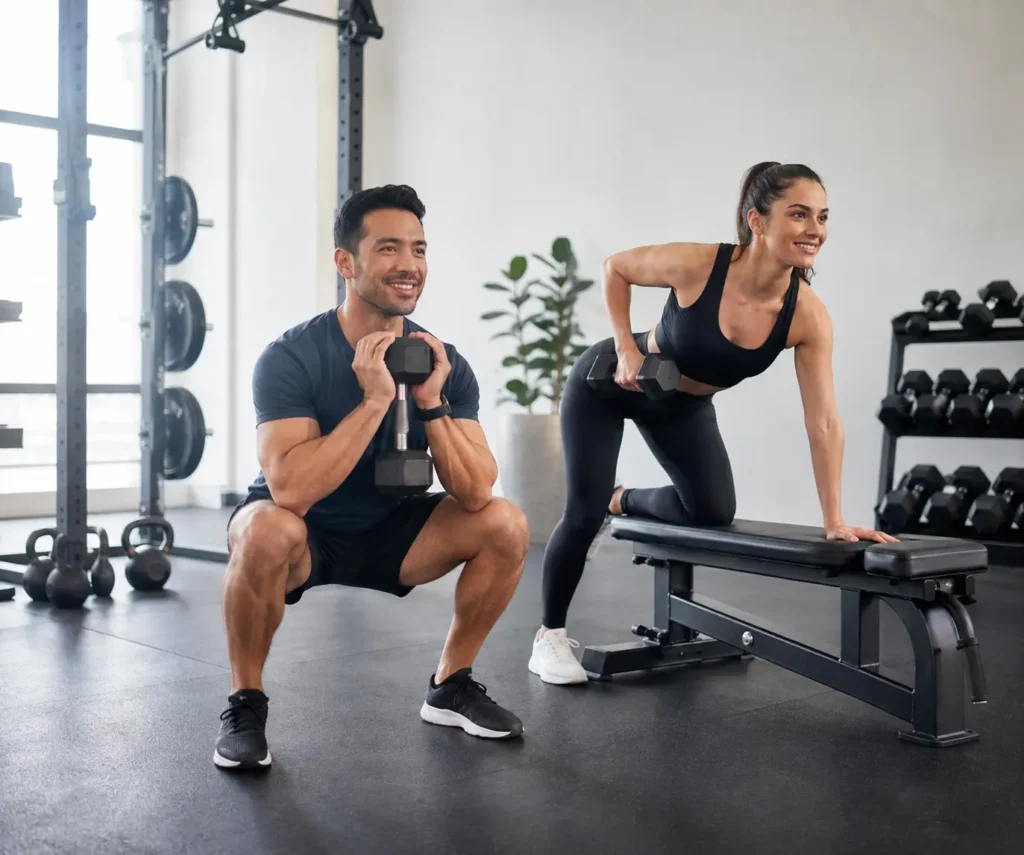
Starting a workout plan can feel harder than the workout itself. You may not know which exercises to choose, how many sets to perform, or how much weight to lift. You may also worry about poor form, injury, or wasting time on a plan that does not work. Many beginners find routines that require five or six gym days each week, which may not be realistic when work, family, studies, and other duties already take up most of their time. Limited equipment can make the process even more confusing, especially when you only have dumbbells, train in a crowded gym, or have just 20 to 30 minutes for each session.
While researching and comparing beginner, gym, dumbbell, and home workout plans, I noticed that many routines provide a list of exercises but fail to explain how to choose a starting weight, replace an exercise, track progress, or adjust the plan when time is limited. This guide solves those problems with a clear full body workout plan that trains your main muscle groups in one session. It includes two-day and three-day schedules, gym and home options, sets, repetitions, rest times, exercise substitutions, safety advice, and an eight-week progression method. The goal is not to give you the hardest workout. It is to help you follow a safe, simple, and realistic plan that fits your schedule, equipment, experience, and fitness goals.
A full body workout trains your main muscle groups in one session. It can help you build strength, gain muscle, and improve your fitness. It also works well when you have limited time.
A good routine includes movements for your legs, chest, back, shoulders, arms, and core. You do not need to perform an exercise for every small muscle. Instead, focus on a few effective movements.
This guide includes gym, dumbbell, machine, and bodyweight plans. You will also learn how many sets to do, how often to train, and how to make progress.
| Training goal | Days per week | Sets per exercise | Rep range |
|---|---|---|---|
| General fitness | 2–3 | 2–3 | 8–15 |
| Muscle growth | 3 | 3–4 | 6–15 |
| Strength | 2–3 | 2–4 | 4–8 |
| Beginner fitness | 2 | 1–3 | 8–12 |
Most adults should train all major muscle groups at least twice each week. The CDC also advises adults to get at least 150 minutes of moderate aerobic activity per week. Full Body Workout?
A full body workout is a training session that works your upper body, lower body, and core.
Most routines use compound exercises. These exercises work several muscles at the same time. Squats, presses, rows, and deadlift movements are common examples.
A balanced session often includes these movement types:
- A squat or lunge
- A hip hinge
- A chest press
- A pulling exercise
- A shoulder exercise
- A core exercise
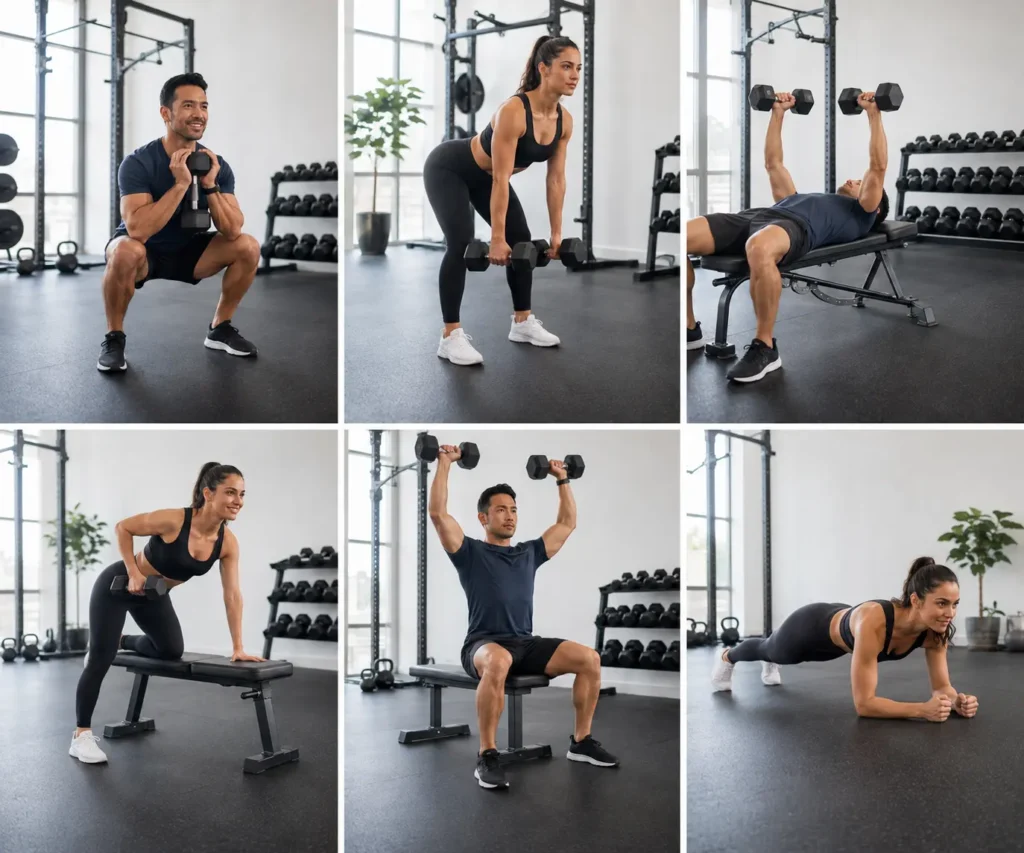
For example, a goblet squat trains your thighs and glutes. A dumbbell press trains your chest, shoulders, and triceps. A row trains your back and biceps.
You can complete a total body workout with gym machines, free weights, resistance bands, or your own body weight. The latest ACSM guidance states that many forms of resistance training can improve fitness. Consistency matters more than using one perfect type of equipment. f Full Body Weight Training
Full body weight training can offer several benefits. However, your results will depend on your effort, recovery, food choices, and training history.
It saves time
A full body workout trains many muscles in one visit. Therefore, you may not need to visit the gym five or six times each week.
Two or three weekly sessions can be enough for many beginners. This schedule also works well for people with busy jobs or family duties.
It trains each muscle more often
A body-part split may train a muscle once each week. In contrast, a full body plan can train the same muscle two or three times.
This does not mean that more days always produce better results. Your total weekly training volume still matters.
It supports strength and muscle growth
Full body training includes many compound exercises. These movements let you train several large muscle groups.
However, you must keep challenging your muscles over time. You may add weight, repetitions, sets, or better technique.
It gives you more schedule freedom
Missing one session in a body-part split may mean skipping one muscle group for a full week.
A full body plan is more flexible. Each session trains most major areas. As a result, one missed workout may have less effect on your weekly plan.
It works with different types of equipment
You can use:
- Barbells
- Dumbbells
- Cable machines
- Resistance bands
- Kettlebells
- Gym machines
- Bodyweight exercises
Therefore, you can follow a full body workout at home or in a gym.
It can support weight management
Strength training can help maintain or build muscle. It can also increase the amount of activity you complete each week.
However, one workout cannot cause fat loss by itself. Your food intake, sleep, daily movement, and total activity also matter.
Full Body Workout vs Split Training
A full body routine trains most major muscles in one session. A split routine divides muscles across different days.
For example, an upper-and-lower split may train the upper body on Monday and the lower body on Tuesday. A push-pull-legs split uses separate days for pushing, pulling, and leg exercises.
Neither method is best for every person.
| A 2024 systematic review found similar strength and muscle growth results from full body and split routines when total training volume was equal. Therefore, your schedule and personal preference should guide your choice. orkout | Split workout |
|---|---|
| Trains most muscles in one session | Trains selected muscles in one session |
| Often uses two or three weekly sessions | Often uses four or more weekly sessions |
| Works well for beginners | Can work well for experienced lifters |
| Offers more schedule flexibility | Allows more work for one muscle at a time |
| Sessions may feel more demanding | Sessions may cause less total-body fatigue |
| Good for general strength | Good for focused muscle training |
Choose full body training when you can exercise two or three days per week. It is also a good choice when you want a simple plan.
Consider a split when you enjoy training more often. It may also help when you need more exercises for specific muscles.
The most useful routine is one that fits your life. You also need to follow it for long enough to make progress.
Full Body Weightlifting Workout Routine
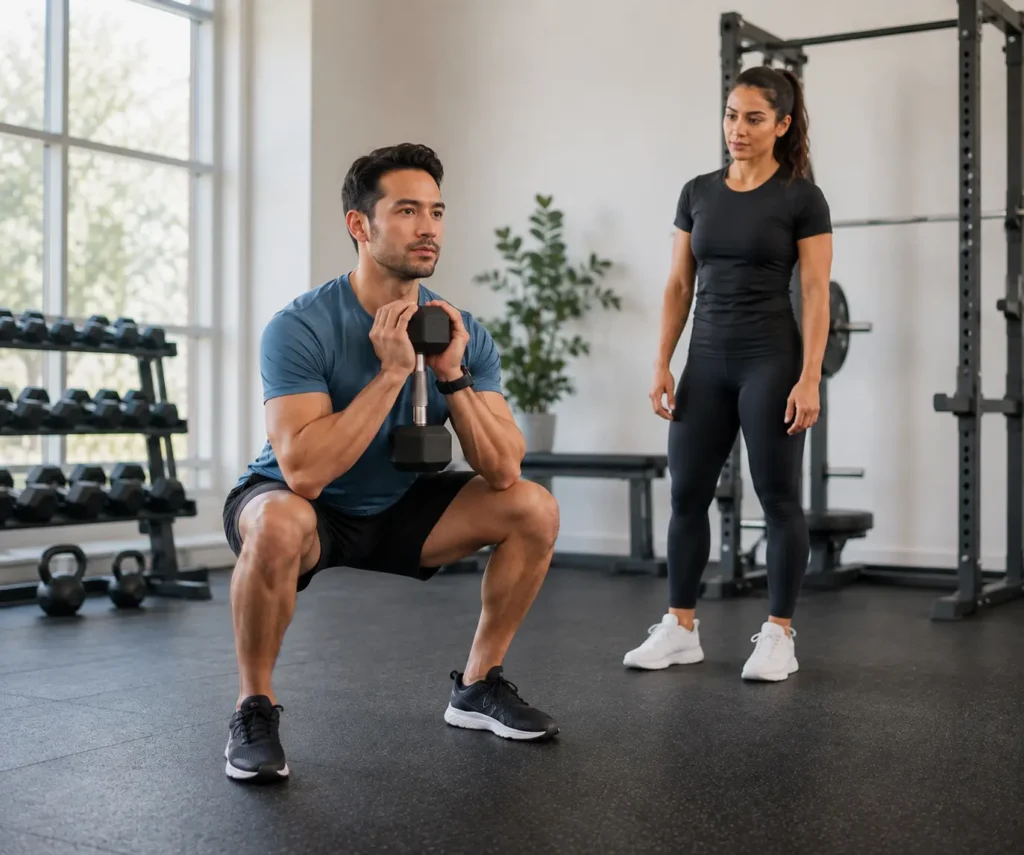
This full body gym workout is a simple starting point. It trains the main movement patterns in one session.
Perform it two or three times each week. Keep at least one rest day between hard sessions.
| Exercise | Sets | Repetitions | Rest |
|---|---|---|---|
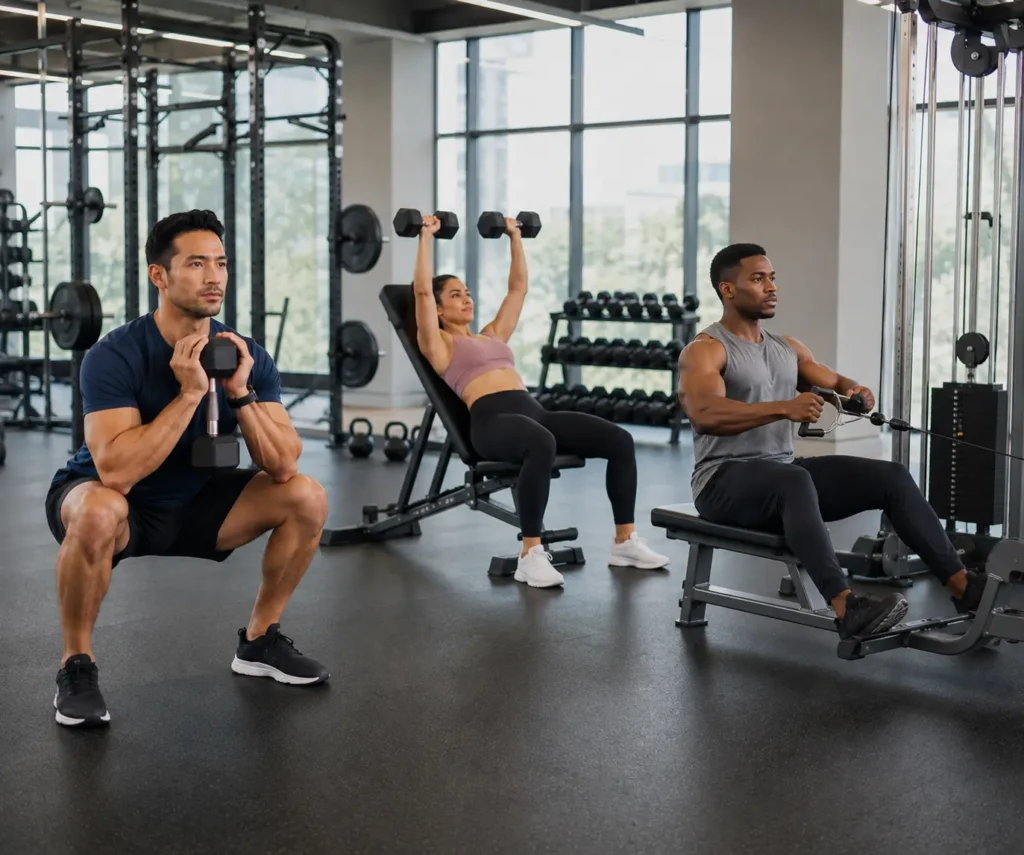
| Goblet squat | 3 | 8–12 | 90 seconds |
| Dumbbell bench press | 3 | 8–12 | 90 seconds |
| Seated cable row | 3 | 8–12 | 90 seconds |
| Dumbbell Romanian deadlift | 3 | 8–12 | 90–120 seconds |
| Dumbbell shoulder press | 2 | 8–12 | 60–90 seconds |
| Plank | 2–3 | 20–45 seconds | 60 seconds |
Start with a weight you can control. The final repetitions should feel hard. Still, you should be able to maintain good form.
Do not use the heaviest weight you can lift on your first day. Instead, use the first two weeks to learn each movement.
Suggested weekly schedule
| Day | Activity |
|---|---|
| Monday | Full body workout |
| Tuesday | Walking or light cardio |
| Wednesday | Rest |
| Thursday | Full body workout |
| Friday | Light cardio or rest |
| Saturday | Optional third workout |
| Sunday | Rest |
Beginners can start with two sessions. Later, they may add a third day when recovery feels good.
How to progress this routine
Use a simple double-progression method:
- Choose a weight you can lift for eight good repetitions.
- Keep the same weight until you can complete 12 repetitions.
- Reach 12 repetitions in every set.
- Add a small amount of weight.
- Return to eight or nine repetitions.
- Repeat the process.
For example, you may use 20-pound dumbbells for eight repetitions. Over time, you may reach 12 repetitions. You can then move to 25-pound dumbbells.
You can also progress by improving your range of motion. Better control is another form of progress.
Eight-week progression guide
| Weeks | Main goal | What to do |
|---|---|---|
| 1–2 | Learn the exercises | Use light weights and controlled form |
| 3–4 | Add repetitions | Work toward the top of each rep range |
| 5–6 | Add weight | Increase the load by a small amount |
| 7 | Build performance | Try to beat one earlier set |
| 8 | Reduce fatigue | Lower the weight or complete fewer sets |
Week eight can act as an easier week. This may help you recover before repeating the plan.
Complete Three-Day Full Body Workout Plan
This three-day full body workout uses different exercises during the week. Each session still trains the main muscle groups.
Follow the plan on non-consecutive days. Monday, Wednesday, and Friday work well for many people.
Warm up for five to ten minutes before each session. You can walk, cycle, or row at an easy pace. Then perform one or two light practice sets of your first large exercise.
Workout 1
The first session focuses on squatting, chest pressing, and horizontal pulling.
| Exercise | Sets | Repetitions |
|---|---|---|
| Barbell squat or goblet squat | 3 | 6–10 |
| Incline dumbbell press | 3 | 8–12 |
| Chest-supported dumbbell row | 3 | 8–12 |
| Leg curl | 2 | 10–15 |
| Dumbbell biceps curl | 2 | 10–15 |
| Cable triceps pressdown | 2 | 10–15 |
Rest for 90 to 120 seconds after the first three exercises. Rest for 45 to 75 seconds after the smaller exercises.
Keep your feet stable during the squat. Lower the weight with control. Then push through your whole foot.
During the incline press, keep your shoulder blades against the bench. Do not let your shoulders move forward at the bottom.
Workout 2
The second session focuses on hip strength, shoulder pressing, and vertical pulling.
| Exercise | Sets | Repetitions |
|---|---|---|
| Romanian deadlift | 3 | 6–10 |
| Seated dumbbell shoulder press | 3 | 8–12 |
| Lat pulldown | 3 | 8–12 |
| Reverse lunge | 2–3 | 8–12 per leg |
| Pallof press | 2 | 10–15 per side |
| Standing calf raise | 2 | 12–20 |
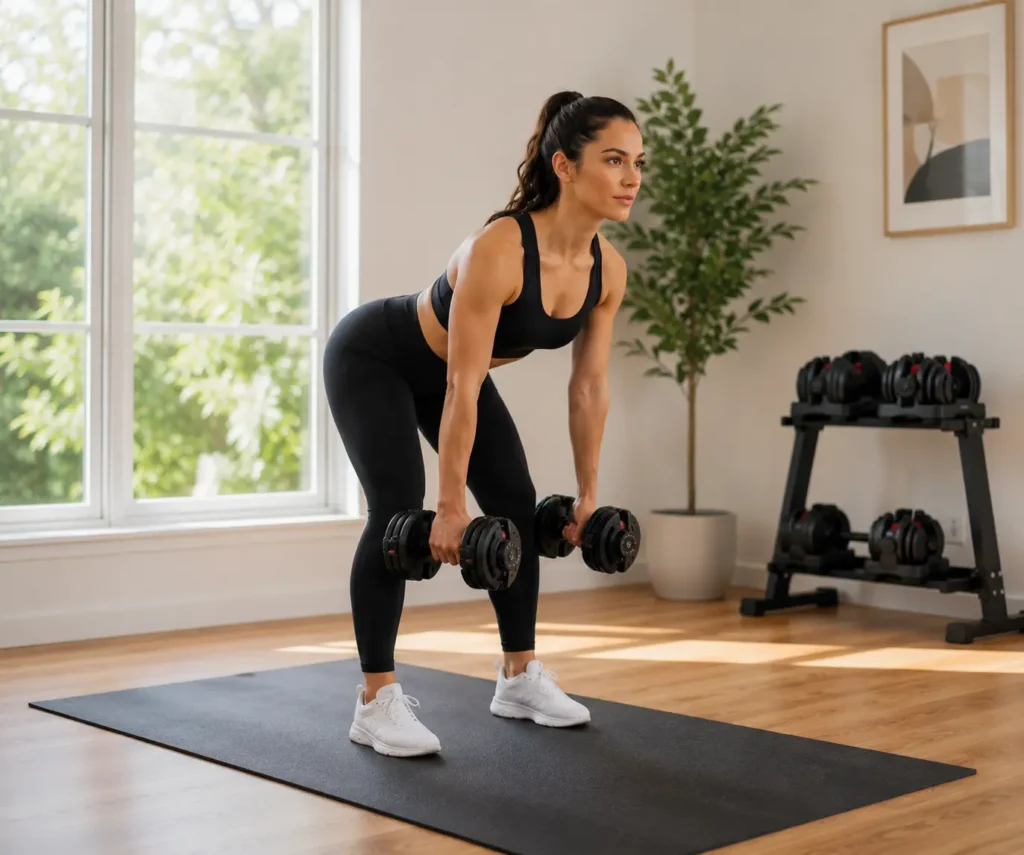
Keep the weights close to your legs during the Romanian deadlift. Push your hips backward. Stop when you feel a strong stretch in your hamstrings.
Do not force the weights toward the floor. Your safe range may differ from another person’s range.
During the lat pulldown, pull your elbows toward your sides. Avoid pulling the bar behind your neck.
Workout 3
The third session uses different angles and movement patterns.
| Exercise | Sets | Repetitions |
|---|---|---|
| Leg press or front squat | 3 | 8–12 |
| Flat dumbbell bench press | 3 | 8–12 |
| One-arm cable or dumbbell row | 3 | 8–12 per side |
| Hip thrust or glute bridge | 3 | 10–15 |
| Dumbbell lateral raise | 2 | 12–15 |
| Farmer’s carry | 3 | 20–40 seconds |
Use a controlled depth on the leg press. Do not let your lower back roll away from the pad.
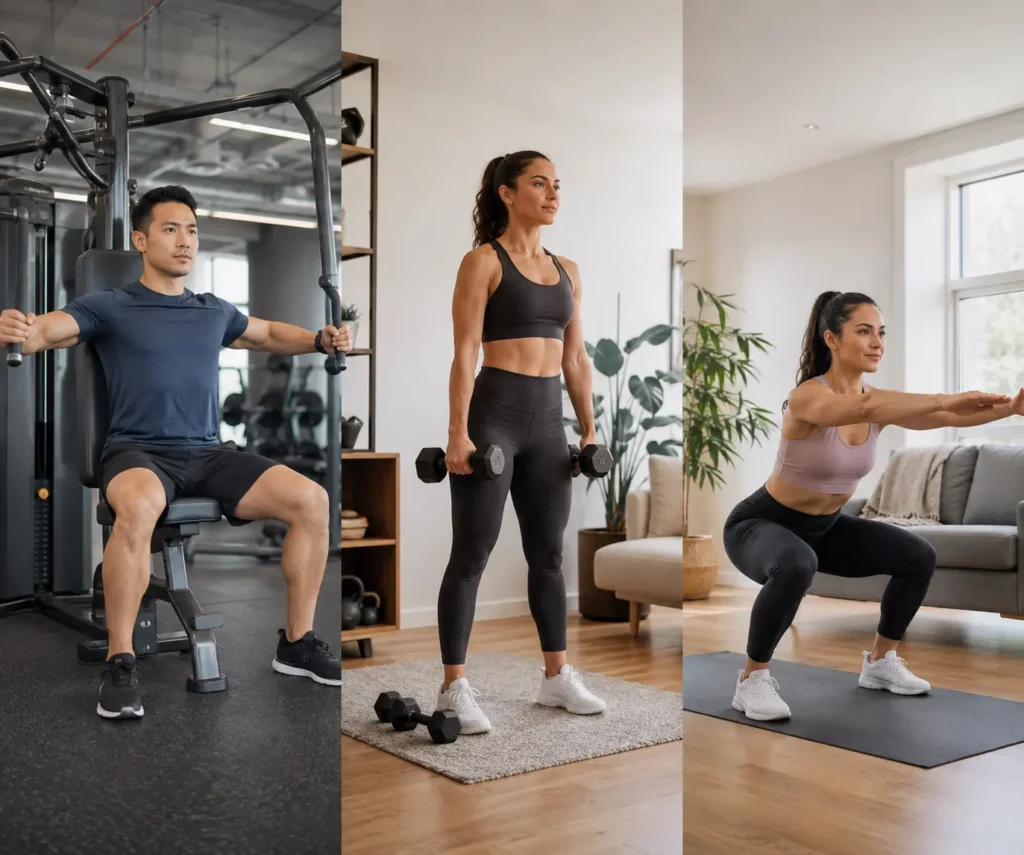
During the hip thrust, finish by squeezing your glutes. Do not lean too far backward or overextend your lower back.
Use a load that lets you walk with a tall posture during the farmer’s carry.
Full Body Workout Routine Variations
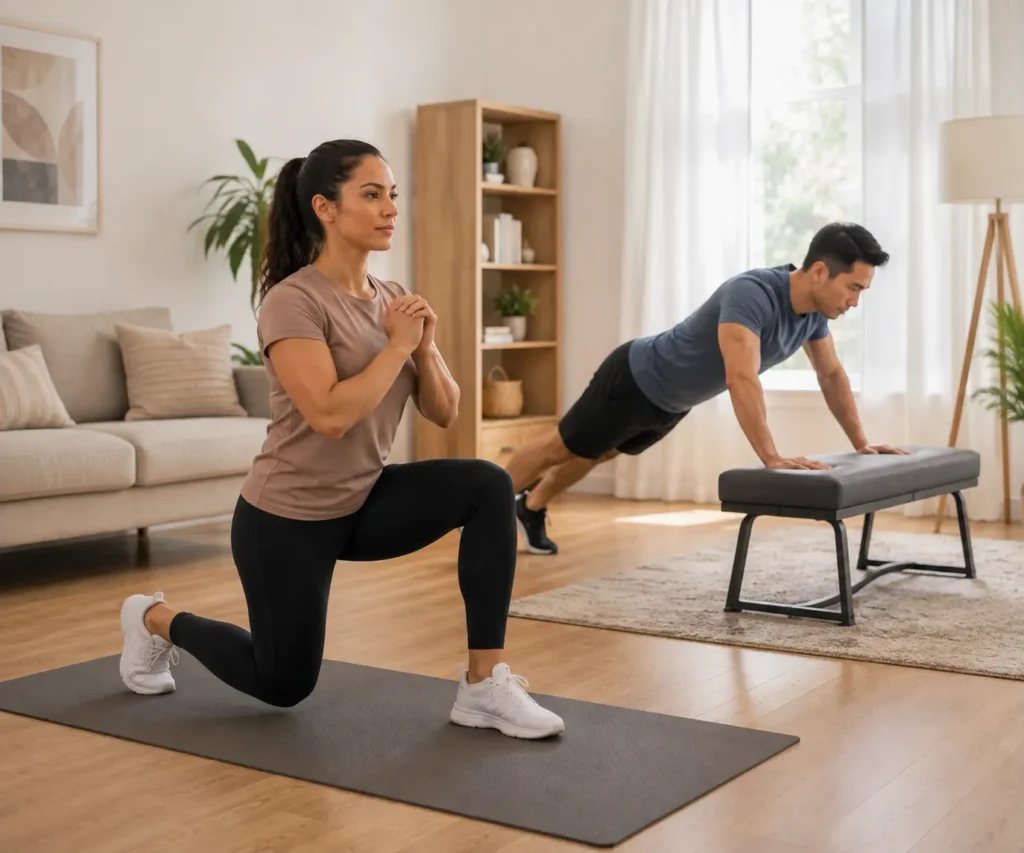
The best full body workout routine depends on your experience and equipment. You can replace an exercise while keeping the same movement pattern.
For example, you can replace a barbell squat with a goblet squat. You can also replace a cable row with a dumbbell row.
| Movement pattern | Gym exercise | Dumbbell option | Bodyweight option |
|---|---|---|---|
| Squat | Barbell squat | Goblet squat | Chair squat |
| Hip hinge | Barbell deadlift | Dumbbell Romanian deadlift | Bodyweight hip hinge |
| Horizontal push | Bench press | Dumbbell floor press | Push-up |
| Horizontal pull | Cable row | One-arm dumbbell row | Inverted row |
| Vertical push | Machine shoulder press | Dumbbell shoulder press | Pike push-up |
| Vertical pull | Lat pulldown | Dumbbell pullover | Assisted pull-up |
| Core | Cable Pallof press | Suitcase carry | Dead bug |
Choose exercises that fit your body and skill level. You do not need to use a painful movement.
Beginner Machine-Based Routine
Gym machines can help beginners learn basic movement patterns. They also provide support and a fixed path.
| Exercise | Sets | Repetitions |
|---|---|---|
| Leg press | 2–3 | 10–12 |
| Machine chest press | 2–3 | 10–12 |
| Seated row machine | 2–3 | 10–12 |
| Seated leg curl | 2 | 10–15 |
| Machine shoulder press | 2 | 10–12 |
| Cable crunch | 2 | 10–15 |
Complete this beginner full body workout twice each week. Start with one or two sets if you have not trained before.
Increase to three sets after two or three weeks. However, only add work when your muscles and joints feel ready.
Machines still require correct setup. Adjust the seat so your joints line up with the machine. Ask a qualified trainer for help when needed.
Intermediate Barbell and Free-Weight Routine
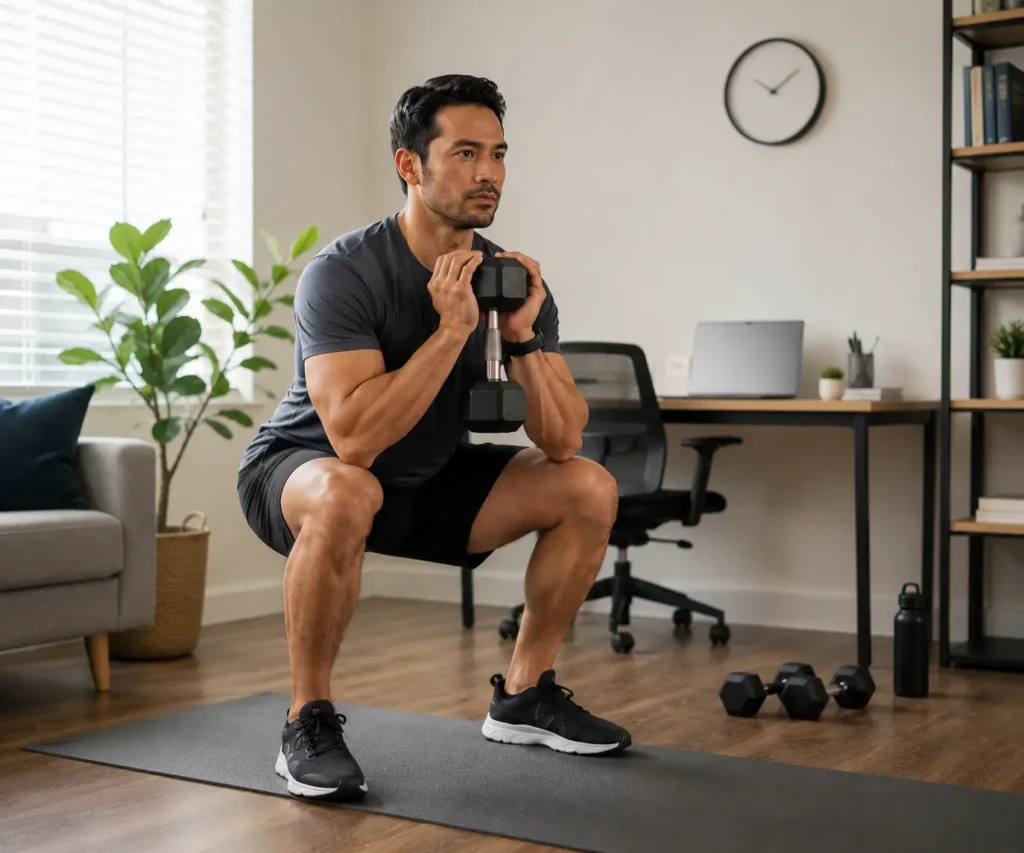
This routine uses more complex exercises. Therefore, it suits people who already understand basic lifting form.
| Exercise | Sets | Repetitions |
|---|---|---|
| Back squat | 3–4 | 5–8 |
| Barbell bench press | 3–4 | 5–8 |
| Barbell or chest-supported row | 3 | 6–10 |
| Romanian deadlift | 3 | 6–10 |
| Standing overhead press | 2–3 | 6–10 |
| Hanging knee raise | 2–3 | 8–15 |
Complete this workout two or three times each week. You may also alternate heavy and moderate days.
For example, use a challenging weight on Monday. Then use a lighter weight and more repetitions on Thursday.
Strength-focused training often uses heavier loads. The ACSM suggests that heavier loads near 80% of a person’s one-repetition maximum can support strength when used for two or three sets. Muscle growth usually needs more total weekly volume. ed to test your one-repetition maximum. Instead, choose a weight that lets you finish the target repetitions with solid form.
At-Home Weighted or Bodyweight Routine
You can complete an effective full body workout at home. You may use dumbbells, resistance bands, or bodyweight exercises.
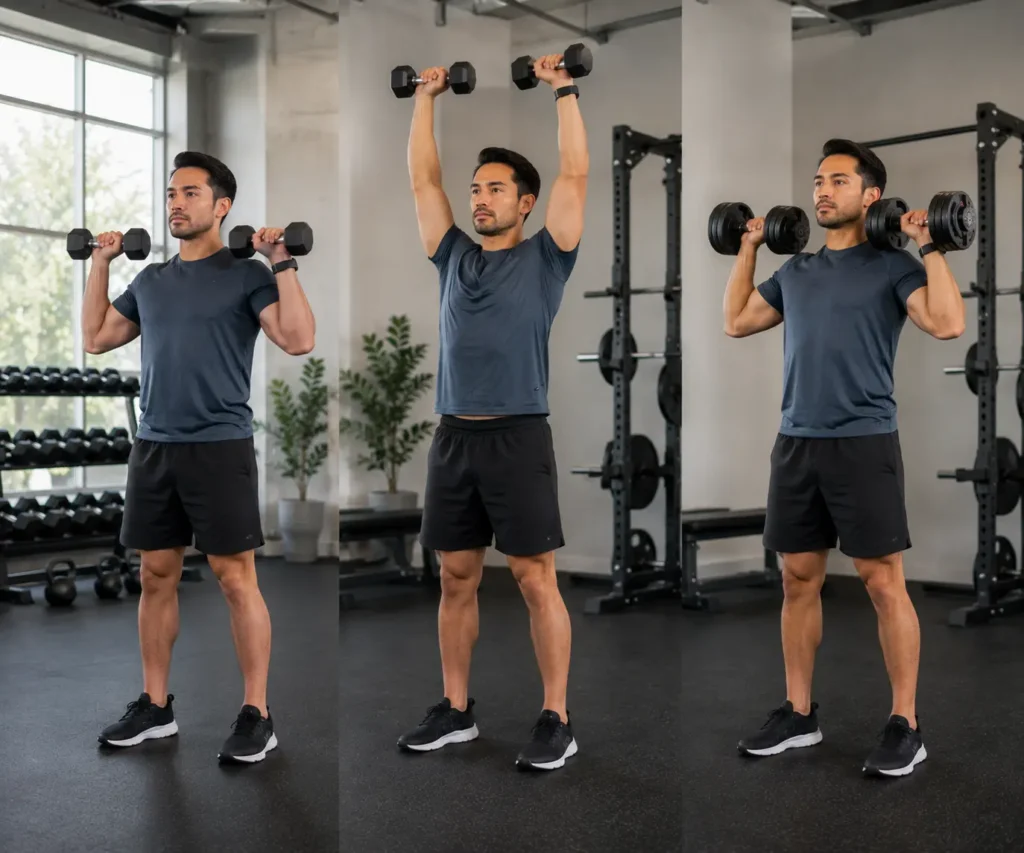
| Exercise | Sets | Repetitions |
|---|---|---|
| Bodyweight or goblet squat | 3 | 10–20 |
| Push-up or dumbbell floor press | 3 | 8–15 |
| One-arm dumbbell or band row | 3 | 10–15 |
| Glute bridge | 3 | 12–20 |
| Reverse lunge | 2 | 8–12 per leg |
| Dead bug | 2–3 | 8–12 per side |
Rest for 45 to 90 seconds between sets.
Make bodyweight exercises harder by slowing each repetition. You can also pause at the hardest point.
For example, take three seconds to lower yourself during a push-up. Pause near the floor. Then push up with control.
A backpack can add resistance to squats and lunges. However, make sure it is closed and balanced. Do not use a damaged bag.
Resistance bands can also work well. Check each band for cracks before using it.
Full Body Workout Safety and Success
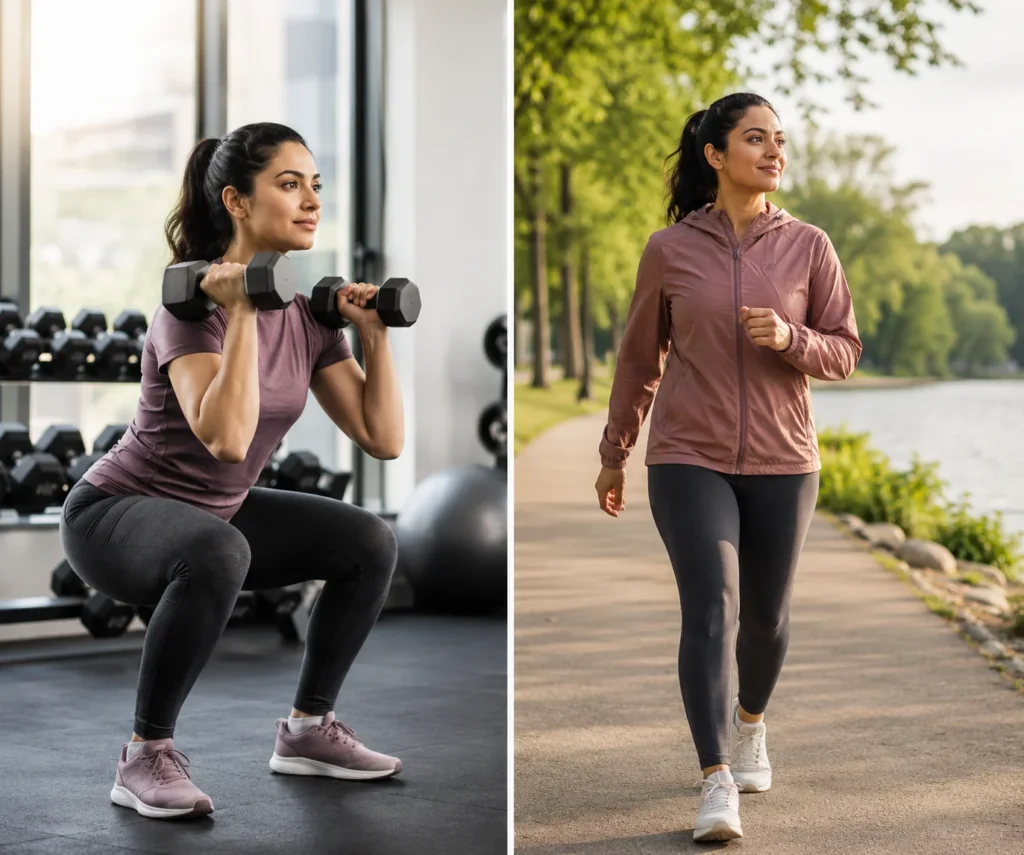
A workout should challenge your muscles. It should not cause sharp or sudden pain.
Follow these steps to train more safely.
Warm up before lifting
Begin with five to ten minutes of easy movement. Walking, cycling, or rowing can increase your body temperature.
Next, practice the first exercise with little or no weight. Add weight in small steps before your working sets.
A warm-up should prepare you for the session. It should not make you tired.
Use correct exercise form
Move through a range that you can control. Avoid rushing through repetitions.
Your form does not need to look the same as another person’s form. Limb length, mobility, and training history can change how an exercise looks.
Still, the movement should remain stable and controlled.
Start with manageable weights
Leave about two or three good repetitions in reserve when you begin.
This means you stop while you could still perform a few more repetitions. You do not need to reach complete muscle failure during every set.
Starting with manageable weights also gives you room to progress.
Rest between workouts
Most people should avoid hard full body sessions on back-to-back days.
A Monday, Wednesday, and Friday schedule provides rest between sessions. A Tuesday and Saturday schedule can also work.
Sleep, food, stress, and other physical activities affect recovery. Therefore, adjust your schedule when needed.
Track your performance
Write down each exercise, weight, set, and repetition.
A training log helps you see progress. It also stops you from guessing during each session.
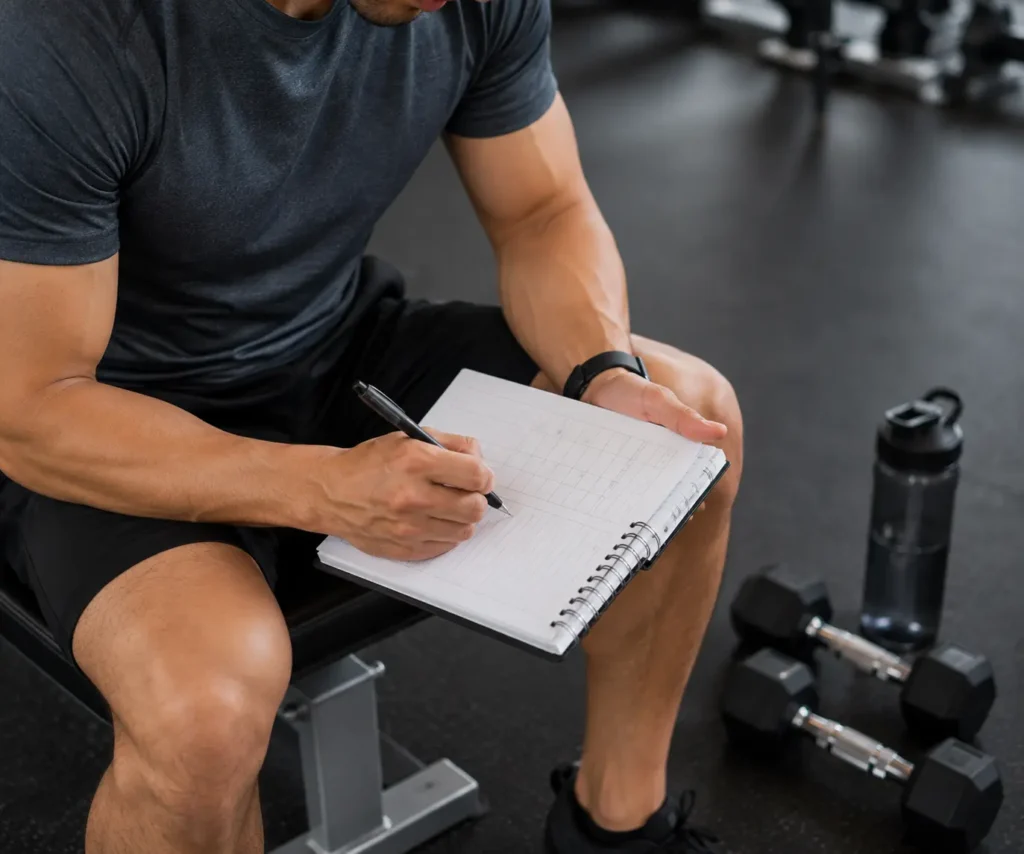
Track these details:
- Exercise name
- Weight used
- Sets completed
- Repetitions completed
- Energy level
- Pain or discomfort
- Notes about form
Do not change the routine too often
New exercises may feel exciting. However, frequent changes make progress harder to measure.
Follow the same main exercises for at least six to eight weeks. Change an exercise when it causes pain, does not fit your equipment, or no longer supports your goal.
Know when to stop
Stop the exercise if you feel sharp pain, chest pain, severe dizziness, or unusual shortness of breath.
Speak with a qualified health professional before starting a new workout if you have an injury, medical condition, or recent surgery. You may also need personal advice during pregnancy.
Full Body Workout FAQ
Is a full body workout good for beginners?
Yes. A full body workout can be a good choice for beginners.
It teaches the main movement patterns. It also lets beginners train each muscle more than once per week without using a complex schedule.
Start with two weekly sessions. Use basic exercises and manageable weights.
Is a full body workout three times a week enough?
Yes. Three sessions per week can support strength, muscle growth, and general fitness.
Your results will depend on the exercises, effort, total sets, food, and recovery. More workout days do not always lead to better results.
Can I do a full body workout every day?
Daily full body strength training is not needed for most people.
Your muscles need time to recover. Instead, perform hard sessions two or three times per week. You can walk, stretch, or complete easy cardio on other days.
How many exercises should a full body workout include?
Most full body sessions include five to eight exercises.
A simple routine may use one squat, one hip hinge, one press, one pull, and one core exercise. You can then add one or two smaller movements.
More exercises do not always create a better workout.
How long should a full body workout take?
Most sessions take 45 to 75 minutes.
A short routine can take 20 to 30 minutes. A high-volume routine may take longer than one hour.
Your rest periods and number of exercises will affect the total time.
How many sets should I perform?
Beginners can start with one to three sets per exercise.
People focused on muscle growth may need more weekly sets. The ACSM notes that about 10 weekly sets per muscle group can support muscle growth, although individual needs vary. training volume slowly. Do not add many sets at once.
How much rest should I take between sets?
Rest for 60 to 90 seconds during most moderate sets.
You may need two to three minutes after a heavy squat, press, or deadlift movement. Smaller exercises often need less rest.
Take enough time to perform the next set with safe form.
Can a full body workout build muscle?
Yes. Full body training can build muscle when it provides enough effort and weekly volume.
You must also make progress over time. In addition, your body needs enough food, protein, and sleep.
Full body and split routines can produce similar muscle growth when weekly volume is equal. ody training good for strength?
Yes. Full body training can improve strength.
It lets you practice major lifts several times each week. However, manage your total volume so you can recover between sessions.
Use lower repetition ranges and heavier weights for your main strength exercises.
Is a full body workout good for weight loss?
It can support a weight-loss plan. Strength training helps you stay active and maintain muscle.
However, fat loss depends on your total energy balance. Your nutrition and daily movement also play major roles.
Combine strength training with aerobic exercise and healthy eating habits.
Should I do cardio before or after my workout?
Do easy cardio before lifting when you use it as a warm-up.
Complete longer or harder cardio after your weights when strength is your main goal. You can also place cardio on a separate day.
The CDC recommends both aerobic activity and muscle-strengthening exercise for general health. form cardio on rest days?
Yes. Light or moderate cardio can fit on rest days.
Walking, easy cycling, and swimming are common choices. However, very hard cardio may affect your recovery from leg training.
Reduce the intensity when your legs feel very tired.
What is the difference between full body and total body training?
The terms usually mean the same thing.
Both describe a session that trains the main upper-body and lower-body muscle groups. Some trainers may use the terms in different ways, but there is no major standard difference.
When should I switch to a split routine?
Consider a split when you want to train four or more days per week.
A split may also help when your full body sessions become too long. It gives you more time to focus on selected muscles.
You do not need to switch if your current routine still fits your goals.
What should I do if an exercise causes pain?
Stop the painful movement.
Try a lighter weight, shorter range, or different exercise. For example, replace a barbell squat with a goblet squat or leg press.
Get help from a qualified professional if the pain continues.
What is the best full body workout?
The best full body workout is one that trains the main movement patterns and fits your needs.
It should match your schedule, equipment, experience, and goals. Most importantly, it should be safe enough to perform on a regular basis.
Start with a simple plan. Track your results. Then make small changes as you become stronger.
Final Takeaway
After reviewing different beginner, gym, dumbbell, and home training plans, one lesson stands out: the best full body workout is not the plan with the most exercises or the hardest movements. It is the plan that matches your current ability and can be followed consistently. Choose five to eight useful exercises, train two or three times per week, and record your sets, repetitions, and weights. Try to add repetitions before increasing the load, and only add weight when you can complete the top of the repetition range with controlled form. Follow the routine for at least six to eight weeks before judging the results, unless an exercise causes pain or does not suit your needs. Your progress will depend on your schedule, equipment, sleep, recovery, and training history, so avoid comparing your starting point with someone else’s. Normal muscle effort may occur, but sharp or worsening pain is a reason to stop and seek qualified guidance. A simple workout performed with good form will usually be more useful than random, difficult workouts that you cannot maintain. Start with the plan that fits your life, track your performance, and increase the challenge in small steps.
